How Endorsements Override Policy Exclusions

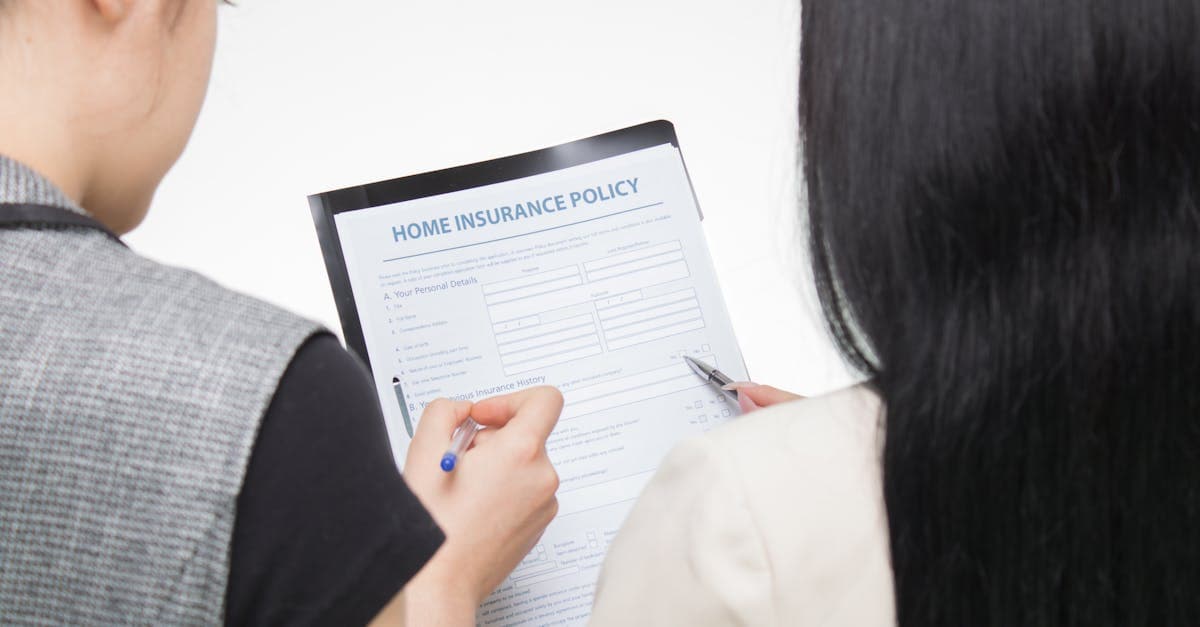
Insurance industry data reveals a significant gap between the endorsements policyholders carry and the endorsements they need.
The average homeowner has 1.8 endorsements on their policy, while risk analysis suggests 5 to 7 endorsements would provide optimal coverage for most households. The most commonly held endorsement is replacement cost for personal property, found on about 45 percent of policies. The most commonly needed but absent endorsement is sewer backup coverage — relevant to 80 percent of homeowners but carried by fewer than 35 percent.
The cost of closing these gaps is surprisingly modest. The five most commonly recommended homeowners endorsements — sewer backup, equipment breakdown, identity theft, ordinance or law, and scheduled personal property — cost a combined $150 to $400 per year. The cumulative protection they provide covers potential losses of $75,000 or more.
In life insurance, riders are more widely used — approximately 60 percent of permanent life insurance policies include at least one rider. The most common are waiver of premium (40 percent), accelerated death benefit (35 percent), and guaranteed insurability (20 percent).
The data consistently shows that endorsements provide exceptional value per premium dollar. A sewer backup endorsement costing $50 per year covers $15,000 to $25,000 in potential loss exposure. An equipment breakdown endorsement at $40 per year covers $50,000 or more in potential mechanical failure costs.
The gap between what policyholders carry and what they should carry represents a significant opportunity for better protection at minimal cost.
Rideshare Endorsement (Auto Insurance)
This is where consumers need to pay attention. If you drive for Uber, Lyft, or similar services, your personal auto policy may not cover you while the app is active. A rideshare endorsement fills this critical coverage gap.
The coverage gap: Your personal auto insurance covers personal driving. The rideshare company's commercial insurance covers you while actively transporting passengers. But when you are logged into the app waiting for a ride request (Period 1), your personal policy may exclude coverage and the company's coverage is minimal.
What the endorsement covers: The rideshare endorsement extends your personal auto coverage to all three rideshare periods — waiting for a request, en route to pickup, and transporting passengers. It provides collision, comprehensive, and liability coverage that your base personal policy would otherwise exclude.
Cost: $15 to $30 per month, or $180 to $360 per year, depending on your insurer and driving history.
Why it matters: An accident during Period 1 without the endorsement could leave you with no coverage from either your personal insurer or the rideshare company. You would be personally liable for all damages and injuries.
Disclosure requirement: You must disclose rideshare activity to your personal auto insurer. Failing to disclose can result in claim denial and policy cancellation — not just for rideshare-related claims but potentially for all claims.
Alternative — commercial policy: If you drive for rideshare full-time, a commercial auto policy may be more appropriate than a personal policy with a rideshare endorsement. Commercial coverage provides broader protection but costs significantly more.
Loss Assessment Endorsement
Your rights matter here. For condo owners and members of homeowners associations, the loss assessment endorsement covers your share of special assessments levied after a major loss that exceeds the association's insurance.
When assessments happen: If a covered loss — fire, storm, liability claim — exceeds the HOA or condo association's master policy limits, the association levies a special assessment against all unit owners to cover the shortfall. Individual assessments can range from a few thousand to $50,000 or more.
Standard coverage: Most homeowners and condo policies include $1,000 in loss assessment coverage as standard. This is often insufficient for major losses.
The endorsement: A loss assessment endorsement increases your coverage to $10,000, $25,000, $50,000, or more, depending on your insurer and needs.
Cost: $25 to $75 per year for $25,000 to $50,000 in additional loss assessment coverage.
Who needs it: Every condo owner and every homeowner in an HOA-governed community should carry loss assessment coverage above the standard $1,000. The risk of a special assessment is real, and the amounts can be substantial.
What triggers a loss assessment: Common scenarios include fire damage to common areas that exceeds the master policy limit, liability claims from injuries in common areas, storm damage to shared structures, and deductible assessments where the master policy deductible is shared among unit owners.
Evaluation: Request information from your HOA about their master policy limits, deductibles, and claims history. This helps you estimate your potential assessment exposure and set your loss assessment coverage accordingly.
Sewer Backup and Water Backup Endorsement
Do not let anyone tell you otherwise. Sewer and water backup is excluded from every standard homeowners policy, yet it is one of the most common causes of basement and lower-level damage. The endorsement to cover it is affordable and essential.
What it covers: Water or sewage that backs up through sewers, drains, or sump pump systems into your home. This includes municipal sewer line backups, private sewer lateral failures, sump pump overflows, and drain blockages.
What it does not cover: Flood damage (surface water entering from outside), which requires separate flood insurance. The distinction is water backing up through your plumbing system versus water entering through doors, windows, or foundations.
Coverage amounts: Sewer backup endorsements typically provide $5,000 to $25,000 in coverage. Some insurers offer higher limits. Choose a limit that reflects your potential exposure — a finished basement with electronics, furniture, and carpet could easily sustain $15,000 to $25,000 in damage.
Cost: $25 to $75 per year for most policies. This makes sewer backup one of the best values in insurance — $50 per year for $15,000 to $25,000 in protection.
Who needs it: Every homeowner with a basement, below-grade living space, or property on a municipal sewer system. The risk is real and the damage is severe. Sewer backup claims average $10,000 to $50,000 depending on the extent of damage and contamination.
Prevention reduces but does not eliminate risk: Installing a backflow prevention valve ($300 to $1,500) significantly reduces sewer backup risk. But prevention is not elimination — the valve can fail, and the endorsement provides a backstop. Some insurers offer premium discounts for homes with backflow valves.
Gap Insurance Endorsement (Auto Insurance)
This is where consumers need to pay attention. Gap insurance covers the difference between your vehicle's actual cash value and the outstanding balance on your auto loan or lease — preventing you from owing money on a car you no longer have.
The gap problem: New vehicles depreciate 20 to 30 percent in the first year of ownership. If you finance with a low down payment or a long loan term, your loan balance can exceed your vehicle's value for several years. If the car is totaled during this period, ACV coverage pays only the car's current value — you owe the difference.
Example: You buy a $35,000 car with $2,000 down and a 72-month loan. After two years, your loan balance is $27,500. Your car's ACV is $22,000. If the car is totaled, insurance pays $22,000 (minus deductible). You still owe $5,500 on a car you no longer have. Gap insurance pays that $5,500.
Where to get it: Gap insurance is available from your auto insurer as an endorsement (typically $20 to $40 per year), from your auto dealer at the time of purchase (often $300 to $800 for the loan term), or from standalone gap insurance providers.
Insurer endorsement vs dealer gap: Gap insurance through your auto insurer is typically much cheaper over the life of the loan. A $30 per year endorsement on a five-year loan costs $150, compared to $500 or more from the dealer.
When you need it: Gap insurance is most important during the first three to four years of a loan when the gap is widest. After that, your loan balance typically falls below your vehicle's value.
Lease requirements: Many lease agreements require gap insurance. Some lease companies include it automatically, while others require you to purchase it separately.
Extended Replacement Cost Endorsement
Your rights matter here. Extended replacement cost coverage pays 125 to 150 percent of your dwelling coverage limit if actual rebuilding costs exceed the stated limit. This endorsement protects against cost overruns from demand surge, material price spikes, and unexpected complications.
How it works: If your dwelling limit is $300,000 and rebuilding costs $350,000 due to unexpected increases, standard replacement cost coverage pays only $300,000. With a 25 percent extended replacement cost endorsement, coverage increases to $375,000, fully covering the $350,000 rebuild.
When it matters: Post-disaster demand surge can increase construction costs 20 to 50 percent above normal. Supply chain disruptions can spike material prices. Code-required upgrades (beyond what ordinance or law coverage addresses) can add unexpected costs. The extended RC endorsement buffers against all of these scenarios.
Coverage levels: Most insurers offer 125 or 150 percent of the dwelling limit. The additional coverage is available only if you have maintained your dwelling limit at or near the current estimated replacement cost — the endorsement is not a substitute for accurate base coverage.
Cost: Typically $50 to $200 per year, depending on your dwelling limit and the extension percentage.
Combined with other endorsements: Extended replacement cost works best in combination with inflation guard (keeps your base limit current) and ordinance or law coverage (covers code-required upgrades). Together, these three endorsements create a comprehensive dwelling protection program.
Who needs it: Every homeowner should consider extended replacement cost. Catastrophic events, supply chain disruptions, and rapid cost increases are not theoretical — they happen regularly. The endorsement provides affordable protection against cost scenarios that are difficult to predict.
How to Evaluate Whether an Endorsement Is Worth the Cost
Do not let anyone tell you otherwise. Not every endorsement is right for every policyholder. A systematic evaluation process helps you identify the endorsements that provide the best value for your specific situation.
Step 1: Identify the risk. What specific gap does the endorsement address? Sewer backup covers a common exclusion. Scheduled property covers sublimit shortfalls. Equipment breakdown covers mechanical failures. Define the risk clearly.
Step 2: Assess your exposure. Is this risk relevant to you? Sewer backup is relevant if you have a basement. Earthquake coverage is relevant if you live in a seismic zone. Rideshare coverage is relevant if you drive for an app. Skip endorsements that address risks you do not face.
Step 3: Quantify the potential loss. What would the uncovered loss cost you? A sewer backup might cause $15,000 in damage. An unscheduled jewelry loss might be limited to a $1,500 payout against a $10,000 value. The larger the potential loss, the stronger the case for the endorsement.
Step 4: Compare cost to exposure. Divide the potential loss by the annual endorsement cost. This gives you the break-even period. A $50 endorsement covering $15,000 in exposure has a 300-year break-even — exceptional value. A $500 endorsement covering $5,000 in exposure has a 10-year break-even — still reasonable but less compelling.
Step 5: Consider probability. A high-probability risk with a modest endorsement cost is an easy yes. A low-probability risk with a high endorsement cost may not be worth it. Most endorsements fall in the low-cost, moderate-probability range — making them generally good values.
Step 6: Review annually. Your risks change over time. Endorsements that were essential may become unnecessary, and new risks may emerge that require new endorsements. Review your endorsement portfolio at every renewal.
Making Endorsements Personal
The best endorsement portfolio is the one that matches your actual life. Your endorsements should reflect your property, your activities, your risks, and your assets.
If you have a basement, add sewer backup coverage. If you have valuable jewelry, schedule it. If you work from home, add a home business endorsement. If you drive for Uber, add a rideshare endorsement. If your home has older systems, add equipment breakdown coverage.
The endorsements you do not need are just as important to identify. If you live in a high-rise condo, you probably do not need service line coverage. If you do not own valuable jewelry, you do not need scheduled property coverage. If you do not work from home, you do not need a home business endorsement.
The personalization is what makes endorsements powerful. They allow you to build coverage that fits your life precisely, without paying for protection you do not need. Take the time to match your endorsements to your risks. The result is comprehensive coverage at a reasonable cost.
Continue reading

Auto Insurance Quote Comparison: What Most Drivers Get Wrong
Comparing auto insurance quotes requires more than matching liability limits. Collision, comprehensive, uninsured motorist, and medical payment coverages all affect your protection and must be compared individually.
Policy Checkup for Homeowners: Dwelling Coverage and Beyond
A homeowners policy checkup should cover dwelling limits, personal property coverage, liability protection, additional living expenses, and endorsements for valuables and natural disasters.

When Assignment of Benefits Actually Helps Policyholders
In legitimate situations, an AOB lets a qualified contractor handle the insurer negotiation while you focus on recovery. Knowing when AOB works in your favor helps you make the right call.