Is Uninsured Motorist Coverage Worth It for Retirees?

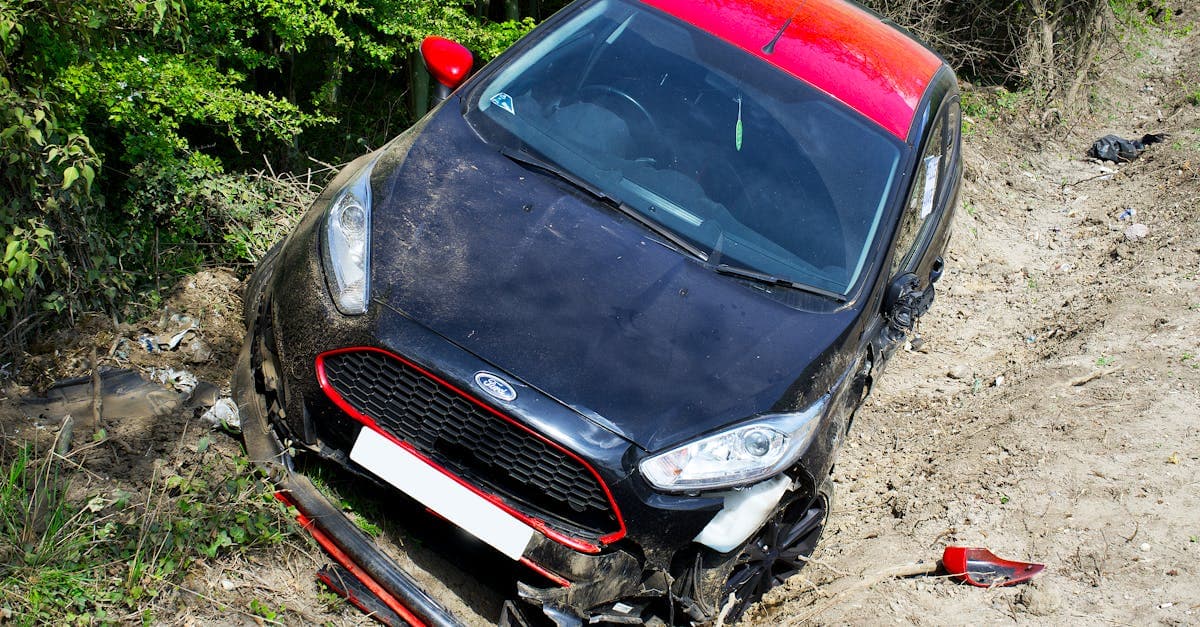
The Insurance Research Council reports that 12.6 percent of American drivers carry no auto insurance. In Mississippi, that figure is 29.4 percent. In Michigan, 25.5 percent. In Tennessee, 23.7 percent. Even in states with aggressive enforcement, the uninsured rate rarely drops below five percent.
These percentages translate into millions of uninsured drivers on American roads. The National Association of Insurance Commissioners estimates that uninsured motorist claims average over twenty thousand dollars for bodily injury alone. Serious injuries — spinal cord damage, traumatic brain injuries, multiple fractures — routinely produce claims in the six-figure range.
Now compare these potential losses to the cost of UM coverage. The average annual premium falls between one hundred and two hundred dollars, depending on state and limits. Over a ten-year period, total UM premiums amount to one thousand to two thousand dollars. A single moderate injury claim can return ten to fifty times that amount.
The actuarial data reveals something that surprises many drivers: UM coverage is arguably underpriced relative to the risk it covers. The combination of high uninsured driver rates, rising medical costs, and relatively stable UM premiums means the expected value of UM coverage has increased steadily over the past decade. For most drivers, the data produces a clear answer: UM coverage is not just worth it — it is one of the best values on your entire insurance policy.
UM Coverage Value for Retirees
Your rights matter here. Retirees face unique considerations when evaluating whether UM coverage is worth the premium. Fixed incomes, increased injury vulnerability, and asset protection priorities all affect the calculation.
Injury severity and recovery: Older adults are more susceptible to serious injuries from vehicle accidents. Bones fracture more easily, recovery takes longer, and complications are more common. Medical costs for retirees injured in accidents tend to be higher and extend over longer treatment periods, making UM coverage more valuable per claim.
Medicare coordination: Retirees on Medicare have health coverage for medical bills, but Medicare has cost-sharing requirements and coverage limitations. UM coverage pays medical expenses without copays or network restrictions and also covers damages Medicare never touches — pain and suffering, loss of enjoyment, and any lost income from part-time work.
Fixed income protection: Retirees living on fixed income from Social Security, pensions, and investments cannot afford unexpected five-figure expenses. UM coverage prevents an uninsured driver accident from depleting retirement savings or forcing changes to a carefully planned retirement budget.
Asset protection: Many retirees have significant assets accumulated over a lifetime — home equity, retirement accounts, savings. While an uninsured driver cannot directly access these assets, the medical expenses and other costs from an uninsured accident can force premature withdrawals, asset liquidation, or debt accumulation. UM coverage shields these assets.
Premium affordability: UM coverage premiums are often lower for retirees who drive fewer miles. The coverage remains just as valuable — even more so given increased injury vulnerability — while the cost decreases. This makes UM coverage an even better value for retired drivers.
UM Coverage vs Other Optional Auto Coverages
This is where consumers need to pay attention. When budget constraints force coverage trade-offs, understanding how UM coverage compares to other optional auto coverages helps you prioritize the ones that deliver the most value.
UM vs rental reimbursement: Rental reimbursement covers the cost of a rental car while yours is being repaired, typically fifteen to fifty dollars per day for a limited period. The maximum benefit is modest — usually five hundred to one thousand dollars. UM coverage can pay tens of thousands. The protection-per-premium-dollar ratio strongly favors UM.
UM vs roadside assistance: Roadside assistance covers towing, battery jumps, and lockouts. The maximum benefit per incident is typically one hundred to two hundred dollars. UM coverage addresses losses that are orders of magnitude larger. If you must choose between them, UM provides far more financial protection.
UM vs comprehensive: Comprehensive coverage protects against theft, weather, and non-collision damage. Both comprehensive and UM are valuable, but they address different risks. If you can carry both, do so. If budget forces a choice and you already have collision, UM coverage protects against the larger potential loss.
UM vs MedPay: Medical payments coverage has lower limits — typically one thousand to ten thousand dollars — and covers only medical expenses. UM coverage has higher limits and covers medical expenses plus lost wages, pain and suffering, and vehicle damage. UM is the more complete coverage.
The priority ranking: Most insurance professionals rank optional auto coverages in this order of value: uninsured motorist coverage first, then collision, then comprehensive, then MedPay, then rental and roadside. UM consistently leads because it addresses the largest potential loss at the lowest relative cost.
The Tax-Free Advantage of UM Payouts
This is where consumers need to pay attention. One frequently overlooked aspect of UM coverage worth is the tax treatment of claim payouts. Understanding this advantage increases the effective value of every dollar UM coverage pays.
Tax-free personal injury payouts: Under current federal tax law, compensation received for personal physical injuries is generally not taxable income. This means your UM claim payout for medical expenses, pain and suffering, and physical injury damages is received tax-free. A fifty-thousand-dollar UM payout is worth fifty thousand dollars in your pocket — not reduced by income tax.
Comparison to wage replacement: If you earn fifty thousand dollars per year and are in the twenty-two percent federal tax bracket plus state taxes, you keep roughly thirty-seven thousand after taxes. A fifty-thousand-dollar UM payout for lost wages provides more spending power than your actual salary because it is not taxed.
Premium cost in after-tax dollars: Your UM premium is paid with after-tax dollars, meaning a one-hundred-fifty-dollar premium actually costs you one hundred fifty dollars. But a claim payout is received tax-free, creating a favorable asymmetry where you pay after-tax dollars in and receive tax-free dollars out.
The effective return enhancement: The tax-free nature of UM payouts effectively increases the return on your premium investment by your marginal tax rate. For a driver in the twenty-four percent combined tax bracket, a thirty-thousand-dollar UM payout has the same spending power as approximately thirty-nine thousand five hundred dollars in taxable income.
Exceptions and caveats: Punitive damages, if any, may be taxable. Interest on delayed payments may be taxable. And the tax treatment of UM payouts can vary in specific circumstances. Consult a tax professional for guidance on your specific situation. But for the vast majority of UM claims, the tax-free treatment significantly enhances the coverage's value.
Is UM Coverage Worth It for Your Family?
This is where consumers need to pay attention. Families face compounded financial risks from uninsured driver accidents because multiple family members depend on shared financial resources. When evaluating whether UM coverage is worth it, families should consider the broader impact on household stability.
Protecting the primary earner: If the primary breadwinner is injured by an uninsured driver and cannot work, the entire family's financial foundation is threatened. UM coverage pays lost wages and pain and suffering, maintaining income flow during recovery. Without it, the family must rely on savings, disability insurance if available, and reduced living standards.
Protecting passengers: UM coverage extends to every passenger in your vehicle. When you drive your children, spouse, or elderly parents, your UM coverage protects all of them. A family of four in a vehicle struck by an uninsured driver could generate four separate UM claims under one policy.
Household member coverage: Your UM policy typically covers resident family members even when they are in other vehicles, walking, or cycling. This means your teenager riding a bicycle or your spouse walking to the grocery store has UM protection through your auto policy.
Financial stability calculation: Families typically have higher fixed expenses — mortgage payments, child care, school costs, car payments — that continue regardless of an accident. UM coverage prevents an uninsured driver accident from cascading into mortgage default, credit card debt, or depleted college savings.
The family premium perspective: The annual UM premium of one hundred to two hundred dollars protects the entire household. Divided among family members, the per-person cost is negligible. No other insurance product provides this breadth of family protection at this price point.
UM Coverage Value State by State
This is where consumers need to pay attention. The value of uninsured motorist coverage varies by state because uninsured driver rates differ dramatically across the country. Understanding your state's specific risk level helps you evaluate whether UM coverage is worth the premium you are paying.
Highest-risk states: Mississippi leads the nation with a 29.4 percent uninsured rate — nearly one in three drivers. New Mexico follows at 21.8 percent, Michigan at 25.5 percent, and Tennessee at 23.7 percent. In these states, UM coverage is exceptionally valuable because the probability of encountering an uninsured driver is two to three times the national average.
Moderate-risk states: States like Florida, Alabama, Washington, and Oklahoma have uninsured rates between 15 and 20 percent. The risk is well above the national average, and UM coverage provides strong value. Florida's combination of high uninsured rates and no-fault limitations makes UM coverage particularly important.
Lower-risk states: States like Massachusetts, New York, and Maine have uninsured rates below 7 percent. The risk is lower but not negligible — even a 5 percent rate means one in twenty drivers carries no insurance. UM coverage still provides meaningful value in these states, and premiums are typically lower to reflect the reduced risk.
Cost correlation: UM premiums generally track with state risk levels. High-risk states charge more for UM coverage, but the coverage is also more likely to be needed. Low-risk states charge less, making the coverage affordable even when the probability of needing it is lower. The value proposition remains favorable in both scenarios.
Interstate travel: If you regularly drive through high-risk states, your home state's uninsured rate understates your actual exposure. Commuters and travelers who cross state lines should consider their full geographic risk profile when evaluating UM coverage worth.
Is UM Coverage Worth It in Florida?
Your rights matter here. Florida presents a particularly compelling case for UM coverage due to the state's high uninsured driver rate, no-fault system limitations, and specific UM rules that enhance the coverage's value.
Florida's uninsured driver rate: Florida consistently ranks among the top ten states for uninsured drivers, with rates hovering between 20 and 26 percent depending on the study and year. This means roughly one in four or five drivers on Florida roads carries no insurance. The probability of encountering an uninsured driver in an accident is dramatically higher in Florida than the national average.
PIP limitations that UM fills: Florida's mandatory PIP coverage caps at ten thousand dollars and covers only eighty percent of medical expenses. For any serious injury, PIP is exhausted quickly, leaving significant uncovered medical costs. UM coverage picks up where PIP stops, paying the remaining medical expenses plus lost wages and pain and suffering that PIP never covers.
Florida stacking benefits: Florida allows stacked UM coverage, which multiplies limits across vehicles on your policy. A Florida family with three vehicles and stacked one hundred thousand UM limits effectively has three hundred thousand in UM protection — a critical advantage given the state's high uninsured rate.
Florida's legal landscape: Florida courts have been protective of UM claimants' rights, making it easier to recover fair settlements. The state's UM statute includes provisions that benefit policyholders, including mandatory offer requirements and bad faith protections.
Florida-specific cost: UM coverage in Florida typically costs between one hundred and two hundred fifty dollars per year due to the higher risk environment. Even at the upper end, the coverage is worth it given that one in four drivers you share the road with may have no insurance at all.
My Professional Verdict: Always Worth It
After working with hundreds of UM claims, my professional opinion is unequivocal: uninsured motorist coverage is worth the premium for every driver I have ever advised.
The drivers who had UM coverage were financially protected, emotionally supported, and able to recover from their accidents without the added burden of uncompensated losses. The drivers who did not have it faced financial hardship that compounded their physical suffering.
I have never met a driver who regretted buying UM coverage. I have met many who regretted declining it. Their stories are uniformly painful — unnecessary financial hardship caused by a decision to save a few dollars per month on a coverage they desperately needed.
If there is one message I want every driver to hear, it is this: check your UM coverage today. If you have it, make sure your limits are adequate. If you do not have it, add it immediately. The cost of coverage is measured in dollars. The cost of going without can be measured in years of financial recovery.
Continue reading

Auto Insurance Quote Comparison: What Most Drivers Get Wrong
Comparing auto insurance quotes requires more than matching liability limits. Collision, comprehensive, uninsured motorist, and medical payment coverages all affect your protection and must be compared individually.

Policy Checkup for Homeowners: Dwelling Coverage and Beyond
A homeowners policy checkup should cover dwelling limits, personal property coverage, liability protection, additional living expenses, and endorsements for valuables and natural disasters.

When Assignment of Benefits Actually Helps Policyholders
In legitimate situations, an AOB lets a qualified contractor handle the insurer negotiation while you focus on recovery. Knowing when AOB works in your favor helps you make the right call.