Comprehensive Insurance and Total Loss: When Your Car Is Totaled

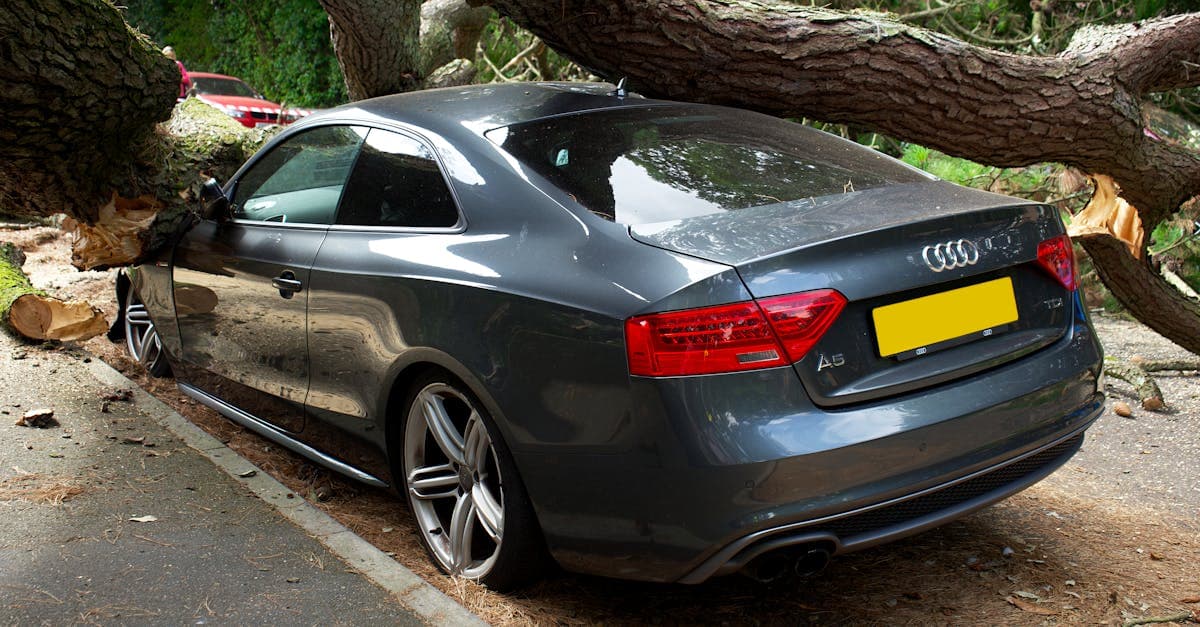
The National Association of Insurance Commissioners reports that comprehensive claims account for approximately 30 percent of all auto insurance claims, with an average payout of around $1,800. In states with high hail activity like Texas, Colorado, and Nebraska, that average climbs significantly — hail damage alone costs the insurance industry over $10 billion annually.
Vehicle theft adds another layer of comprehensive risk. The FBI's Uniform Crime Report shows over 1 million vehicles stolen annually in the United States, with a recovery rate of approximately 56 percent. For the 44 percent that are never recovered, comprehensive insurance pays the vehicle's actual cash value minus the deductible.
Animal collisions contribute roughly 1.9 million insurance claims per year, according to the Insurance Information Institute. The average animal collision claim exceeds $4,300, and these claims spike dramatically during deer mating season in October through December.
These statistics reveal why comprehensive coverage matters. The risks it covers are not theoretical — they are statistically common events that affect millions of drivers annually. Yet surveys consistently show that a significant percentage of drivers cannot accurately describe what comprehensive insurance covers, leading to either unnecessary coverage purchases or dangerous gaps in protection. This guide provides the complete picture.
Animal Collisions and Comprehensive Insurance
Your rights matter here. Animal-related vehicle damage is one of the most common comprehensive claims, particularly in rural and suburban areas where wildlife corridors intersect with roadways. Understanding how these claims work helps you respond appropriately when an animal encounter occurs.
Why animal strikes are comprehensive claims: The insurance industry classifies animal collisions as comprehensive — not collision — because the animal is an external, uncontrollable hazard rather than a roadway object. This classification benefits policyholders because comprehensive claims generally have less premium impact than collision claims.
Deer collisions: White-tailed deer account for the vast majority of animal collision claims. The Insurance Information Institute estimates that deer-vehicle collisions exceed 1.5 million annually, with average claim costs above $4,300. Collisions spike dramatically during October through December when deer mating season coincides with reduced daylight hours.
Other animal claims: Beyond deer, comprehensive covers collisions with moose, elk, bears, livestock that wander onto roadways, large birds, and even smaller animals when the resulting vehicle damage is significant. In some regions, wild boar, alligators, and coyotes contribute to claim frequency.
The swerve distinction: Here is a critical detail many drivers miss. If you swerve to avoid an animal and hit a tree, guardrail, or ditch instead, that is a collision claim — not comprehensive. Your vehicle did not strike the animal; it struck a fixed object. This distinction can mean a different deductible applies and a different impact on your rates. When avoidance is not safely possible, striking the animal directly is sometimes the better insurance outcome, though personal safety always comes first.
Documentation requirements: For animal collision claims, photograph the damage, the animal if safely possible, and the location. Note the time and weather conditions. A police report strengthens the claim, particularly in areas where deer crossings are well documented.
When Comprehensive Insurance Is Required
This is where consumers need to pay attention. Unlike liability insurance, comprehensive coverage is not required by state law. However, financial institutions that hold a stake in your vehicle frequently mandate it as a condition of financing or leasing. Understanding these requirements helps you comply without overpaying.
Lender requirements: If you financed your vehicle through a bank, credit union, or dealer financing, your loan agreement almost certainly requires comprehensive coverage for the life of the loan. The lender has a financial interest in the vehicle — if it is stolen or destroyed by a covered event, they want assurance that insurance will pay enough to cover the outstanding loan balance.
Lease requirements: Leased vehicles always require comprehensive coverage because the leasing company owns the vehicle. Lease agreements typically specify maximum deductible amounts — often $500 or $1,000 — that you must maintain throughout the lease term. Exceeding the specified deductible violates your lease agreement.
Force-placed insurance: If you drop comprehensive coverage while your vehicle is financed or leased, the lender will purchase a policy on your behalf and add the cost to your loan payments. Force-placed insurance is significantly more expensive than coverage you purchase yourself and provides minimum protection. Avoiding force-placed insurance by maintaining your own coverage always saves money.
After payoff: Once you own your vehicle outright, the decision to carry comprehensive is entirely yours. No state requires it for registered vehicles. At this point, the decision becomes a financial calculation based on your vehicle's value, your local risks, and your ability to absorb a total loss out of pocket.
Employer requirements: Some employers who provide company vehicles or reimburse employees for business use require comprehensive coverage. Check your employment agreement or vehicle use policy for specific requirements.
Comprehensive Insurance for New Vehicles
Your rights matter here. New vehicles represent significant financial investments that warrant careful comprehensive coverage decisions. Whether required by your lender or chosen by you, comprehensive coverage on a new vehicle comes with considerations unique to newer cars.
Lender requirements: Most new vehicle purchases involve financing, and virtually all lenders require comprehensive coverage as a loan condition. You typically cannot choose to skip comprehensive on a financed vehicle. The lender specifies maximum deductible amounts — usually $500 or $1,000 — that you must maintain throughout the loan.
Rapid depreciation risk: New vehicles depreciate fastest in their first two to three years. A vehicle purchased for $35,000 may be worth $25,000 after two years but still have a loan balance of $28,000. Comprehensive coverage pays actual cash value — $25,000 — leaving you $3,000 short of your loan balance. Gap insurance addresses this specific risk and is strongly recommended for new vehicle purchases.
New-car replacement endorsements: Some insurers offer endorsements that replace a totaled new vehicle with a brand-new equivalent rather than paying actual cash value. These endorsements typically apply for the first one to two years of ownership and cost an additional premium. For new vehicles with rapid depreciation, this endorsement can be extremely valuable.
Technology repair costs: New vehicles contain expensive sensors, cameras, computers, and driver assistance systems that increase comprehensive repair costs. A hail-damaged windshield on a vehicle with adaptive cruise control and lane departure sensors may cost $1,500 to replace and recalibrate, compared to $400 for a basic windshield. These higher repair costs make comprehensive coverage particularly important for technology-equipped new vehicles.
Lower deductible justification: For new vehicles, carrying a lower comprehensive deductible is often justified by the higher repair costs and greater financial exposure. The premium difference between a $250 and $500 deductible is modest relative to the vehicle's value and potential claim costs.
Comprehensive Insurance for Classic and Collector Vehicles
This is where consumers need to pay attention. Classic and collector vehicles require a different approach to comprehensive insurance because their value dynamics are the opposite of standard vehicles — they appreciate rather than depreciate. Standard comprehensive policies, which pay actual cash value, often undervalue these vehicles significantly.
The valuation problem: Standard auto policies use actual cash value, which is based on depreciation. A 1969 Mustang that would receive a modest ACV under a standard policy may actually be worth $50,000 or more to collectors. Filing a comprehensive claim under a standard policy would result in a devastating underpayment.
Agreed value policies: Specialty insurers offer agreed value policies where you and the insurer establish the vehicle's value when the policy is written. If a covered comprehensive loss occurs, the insurer pays the agreed value without depreciation — providing far better protection for appreciated vehicles. Getting a professional appraisal supports your agreed value claim.
Specialty insurer advantages: Companies that specialize in classic and collector vehicles understand the unique parts sourcing, restoration techniques, and valuation methods these vehicles require. They often provide coverage features that standard insurers do not, including spare parts coverage, flatbed towing requirements, and restoration coverage during active projects.
Storage and usage restrictions: Classic vehicle policies typically come with usage restrictions such as pleasure use only, no daily commuting, and mandatory enclosed storage. These restrictions reduce the insurer's risk exposure and keep premiums lower. Violating these restrictions can void your coverage, so understanding and following them is essential.
Documentation and provenance: Maintaining thorough documentation of your classic vehicle — including photographs, restoration records, appraisals, and provenance history — strengthens your position in any comprehensive claim. This documentation establishes both the vehicle's value and its condition prior to the loss.
Comprehensive vs Collision: Understanding the Difference
This is where consumers need to pay attention. The distinction between comprehensive and collision insurance is one of the most important concepts in auto coverage. Both protect your vehicle, but they cover fundamentally different types of events — and understanding the difference is vaccinating your finances against unpredictable automotive ailments.
Collision coverage pays when: Your vehicle hits another vehicle, your vehicle hits a stationary object like a pole or guardrail, your vehicle rolls over, your vehicle hits a pothole, or another vehicle hits your vehicle. The common thread is a collision — an impact involving your vehicle while it is in motion or being operated.
Comprehensive coverage pays when: Your vehicle is damaged by weather, theft, vandalism, fire, falling objects, animal strikes, glass breakage, civil unrest, or flooding. The common thread is damage from events outside the act of driving — forces that affect your vehicle regardless of whether it is moving.
The deer test: Insurance professionals often use this example to illustrate the difference. If you swerve to avoid a deer and hit a tree, that is a collision claim — your vehicle struck an object. If you hit the deer itself, that is a comprehensive claim — an animal collision. Same deer, very different coverage classification.
Why the distinction matters financially: Comprehensive claims are generally treated more favorably by insurers because they involve events outside your control. Collision claims, especially those where you are at fault, are viewed as higher risk. This means comprehensive claims tend to have less impact on your future premiums, which should factor into your filing decisions.
Choosing the Right Comprehensive Deductible
Your rights matter here. Your comprehensive deductible is the amount you pay out of pocket before the insurer covers the rest of a comprehensive claim. Choosing the right deductible is vaccinating your finances against unpredictable automotive ailments — it directly affects both your premium and your financial exposure when you file a claim.
Common deductible options: Most insurers offer comprehensive deductibles of $100, $250, $500, $1,000, and sometimes $1,500 or $2,500. The default is often $500, but accepting the default without analysis is a missed opportunity to optimize your coverage cost.
The premium-deductible tradeoff: Raising your comprehensive deductible from $250 to $500 typically reduces your comprehensive premium by 15 to 20 percent. Moving from $500 to $1,000 saves another 10 to 15 percent. These savings compound year after year, while the higher deductible only costs you more if you file a claim.
Separate from collision deductible: Your comprehensive and collision deductibles are independent. Many drivers set them at the same level out of habit, but there are good reasons to set them differently. Comprehensive events like hail and theft are more common in some areas than collisions, so a lower comprehensive deductible may make sense if you live in a high-risk area for weather or theft.
The break-even calculation: Compare the annual premium savings from a higher deductible to the additional out-of-pocket cost if you file a claim. If raising your deductible from $250 to $500 saves you $100 per year, and the additional deductible exposure is $250, you break even in 2.5 years without a claim. For most drivers, higher deductibles pay off over time.
Glass deductible considerations: In states with full glass coverage, your comprehensive deductible may not apply to windshield claims. In other states, choosing a lower comprehensive deductible specifically to reduce windshield claim costs may be worthwhile if you drive frequently on roads with loose gravel or debris.
Making Comprehensive Coverage Work for You
In my experience, the drivers who get the most value from comprehensive insurance are the ones who understand it before they need it. They know their deductible, they know what events are covered, and they have a documentation plan ready to execute if something happens.
The worst time to learn about comprehensive coverage is after a hailstorm has damaged your vehicle and you are scrambling to understand the claims process. The best time is now — before anything happens — when you can review your coverage, adjust your deductible, and prepare a documentation strategy at your own pace.
Take the time to photograph your vehicle thoroughly today. Store those photos somewhere accessible. Review your declarations page and confirm your comprehensive coverage details. These simple preparations take less than thirty minutes and dramatically improve your position if you ever need to file a comprehensive claim.
Your vehicle is one of your most valuable assets. Comprehensive insurance protects it against the events you cannot prevent. Make sure your protection matches your needs.
Continue reading

Auto Insurance Quote Comparison: What Most Drivers Get Wrong
Comparing auto insurance quotes requires more than matching liability limits. Collision, comprehensive, uninsured motorist, and medical payment coverages all affect your protection and must be compared individually.

Policy Checkup for Homeowners: Dwelling Coverage and Beyond
A homeowners policy checkup should cover dwelling limits, personal property coverage, liability protection, additional living expenses, and endorsements for valuables and natural disasters.

When Assignment of Benefits Actually Helps Policyholders
In legitimate situations, an AOB lets a qualified contractor handle the insurer negotiation while you focus on recovery. Knowing when AOB works in your favor helps you make the right call.